What Is Unetwork? The Complete Guide to the Decentralized Telecom Network
· 14 min read · Unetwork Guide

Unetwork is a decentralized telecom verification network that turns everyday smartphones into edge nodes. Your phone performs real tasks for telecom companies. You earn real money for it. That is the entire model in one sentence.
Formerly known as Unity Network, Unetwork is built by Minutes Network and partnered with World Mobile, Polkadot, and other blockchain ecosystems. The network sits at the intersection of decentralized physical infrastructure (DePIN) and traditional telecom operations. Telecom companies need accurate, ground level data about their networks. Unetwork provides it at a fraction of the cost of traditional testing methods. Operators earn UPs (Unetwork Points) for every task completed, with 1 UP pegged to 1 USD.
What Is Unetwork and How Does It Work?
Unetwork is a decentralized mobile network where real smartphones perform real telecom verification tasks in exchange for cryptocurrency rewards. Unlike traditional crypto mining that relies on specialized hardware burning electricity, Unetwork uses ordinary phones to do work that telecom companies actually need done.
Here is the core loop. Telecom operators like World Mobile need to know whether their network coverage claims match reality. Does a cell tower in Manila actually provide 4G coverage at the intersection it claims to cover? Does an SMS sent from Lagos arrive with the correct caller ID? These are questions that traditional telecom companies spend millions answering through manual drive tests and expensive proprietary equipment.
Unetwork replaces that expensive infrastructure with a distributed army of smartphone operators. When you run the Unetwork app, your device becomes part of a global edge network. It receives task assignments. It completes them using your phone's built in cellular capabilities. It reports verified results back to the blockchain. Each completed task generates a cryptographic proof that the work was actually done. You earn UPs for it.
The app runs quietly in the background. You do not need to actively manage it or stare at your screen. Your phone performs its assigned tasks and the rewards accumulate automatically.
Why Did Unity Network Rebrand to Unetwork?
Unity Network officially rebranded to Unetwork to establish a distinct identity separate from Unity Technologies, the company behind the Unity game engine. The name collision created real problems. Someone searching for "Unity Network tasks" would find documentation about networking in Unity game development instead of the telecom verification network.
Unetwork is the official rebranded name of Unity Network. All Unity Node licenses, operator licenses, and the Unity app now operate under the Unetwork brand. The technology, rewards system, and license structure remain exactly the same.
If you held a Unity Node license before the rebrand, you still hold it. Your earnings history, operator status, and lease codes all carried over unchanged. The only thing that changed is the name.
The rebrand also signals maturity. As the network expanded into partnerships with established telecom players like World Mobile, a distinct brand identity became essential. Unetwork now has its own domain, its own app listings, and its own presence in the DePIN ecosystem without competing for attention with an unrelated gaming company.
How Does the Unetwork Edge Network Create Value?
The Unetwork edge network solves a fundamental problem in telecom: the gap between what networks claim to deliver and what they actually deliver on the ground. This gap costs the telecom industry billions annually in customer churn, regulatory fines, and wasted infrastructure spending.

Traditional telecom testing is expensive and slow. A single drive test vehicle equipped with professional measurement hardware costs $200,000 or more. Operating it requires trained technicians, fuel, insurance, and logistics. A drive test campaign covering a single city can take weeks and cost tens of thousands of dollars. And by the time the results are compiled, network conditions may have already changed.
Unetwork flips this model completely. Instead of a few expensive vehicles, the network uses thousands of everyday smartphones already carried by real people going about their daily lives. The cost per data point drops dramatically. The coverage is continuous rather than periodic. And the data reflects real user experience because it comes from real user devices on real networks.
Think of it like Waze. Waze crowdsources traffic data from millions of drivers to build real time maps that no single company could create alone. Unetwork does the same thing for telecom infrastructure. Every phone running the app contributes a small piece of the overall picture. Together they create a comprehensive, continuously updated view of network performance that telecom companies are willing to pay for.
Why Telecoms Pay for Edge Verification Data
Telecom companies operate under strict regulatory requirements. In most countries, carriers must prove their coverage claims to government regulators. They must demonstrate minimum quality standards. They need to identify dead zones, dropped calls, and routing errors before customers complain.
Beyond regulation, there is a competitive angle. A carrier that knows exactly where its network is strong and where it is weak can target infrastructure investment more effectively. Instead of building towers based on population density maps, they build based on actual measured gaps in coverage. This precision saves millions in capital expenditure.
Unetwork provides this data at scale. When thousands of phones across the Philippines are simultaneously testing caller ID accuracy, measuring signal strength, and scouting coverage boundaries, the resulting dataset is far more comprehensive than anything a traditional testing program could produce. And it updates in real time.
| Factor | Traditional Drive Testing | Unetwork Edge Network |
|---|---|---|
| Equipment cost | $200,000+ per vehicle | $0 (operators use existing phones) |
| Coverage frequency | Periodic (weeks between tests) | Continuous (24/7 real time data) |
| Geographic reach | Limited to planned routes | Everywhere operators carry phones |
| Data perspective | Simulated test environment | Real user devices on real networks |
| Scaling cost | Linear (more vehicles = more cost) | Near zero (more operators join voluntarily) |
What Are Unetwork Licenses and How Do They Work?
Unetwork licenses are digital permissions that allow smartphones to participate in the network and earn rewards. The system has two tiers: Unetwork Node Owners (UNO) who purchase nodes, and Unetwork License Operators (ULO) who lease individual licenses from node owners to run on their phones.
A single node contains 200 licenses. In Round 1, a full node cost $5,000. Round 2 pricing is $10,000 per node of 200 licenses. Node owners can operate all 200 licenses themselves if they have the devices, or they can lease licenses to operators who run them on their own phones.
UNO vs ULO: Node Owners and License Operators
The UNO (Unetwork Node Owner) is the person who purchased the node. They own the 200 licenses bundled with it. The ULO (Unetwork License Operator) is anyone who leases one or more of those licenses and runs them on their phone.
This separation exists because node owners may not live in regions where telecom tasks are available. They may not have enough devices to run all 200 licenses. Leasing allows operators in active markets like the Philippines, India, Nigeria, and Thailand to run licenses on their phones and split the earnings with the node owner.
Operator Splits: 50/50, 40/60, and 30/70
When a UNO leases a license to a ULO, they agree on a revenue split. Three standard splits are available:
| Split | Node Owner Gets | Operator Gets | Best For |
|---|---|---|---|
| 50/50 | 50% | 50% | Equal risk sharing, most common |
| 40/60 | 40% | 60% | High demand markets, attracting reliable operators |
| 30/70 | 30% | 70% | Premium task regions, top uptime operators |
The split is set when the license is leased and applies automatically to all earnings. Operators can browse available licenses and choose the split that best fits their situation.
Browse Available Unetwork Licenses
Copy a lease code from our directory and start earning in the Unetwork app today.
View License DirectoryHow Much Can You Earn with a Unetwork License?
A single Unetwork license currently earns approximately $0.80 to $1.20 per month in UPs at typical uptime levels. A full node of 200 licenses generates roughly $48 per month at 50% uptime. Actual earnings vary significantly based on region, task availability, and how consistently your phone stays connected.
| Item | Amount |
|---|---|
| Estimated monthly UPs earned (full node, 50% uptime) | ~48 UPs ($48) |
| License credit (monthly) | $1.99 to $3.99 |
| Mobile data (~7 GB/month) | ~$3 |
| Estimated net monthly profit | ~$41 to $43 |
The math improves when you run multiple licenses across multiple devices or operate in a region with high task density. Operators in the Philippines and India tend to see the most consistent task flow. Earnings also scale with uptime. The more hours per day your phone is connected and available, the more you earn.
It is important to set realistic expectations. Unetwork is not a get rich quick scheme. At current task rates and network size, individual license earnings are modest. The value proposition is strongest for operators in developing markets where even small dollar amounts translate to meaningful local purchasing power.
Round 2 Pricing and ROI
Round 1 nodes sold for $5,000 (200 licenses). Round 2 nodes are priced at $10,000. At current earning rates of roughly $48 per month for a full node at 50% uptime, the breakeven timeline for a Round 2 node is measured in years, not months.
The bet is that task volumes and earning rates will increase as the network grows and more telecom partners come on board. That is a reasonable expectation given the direction of the DePIN sector. But no guaranteed earning rates exist. Historical performance does not guarantee future results. Do your own research before purchasing a node.
What Tasks Does the Unetwork App Perform?
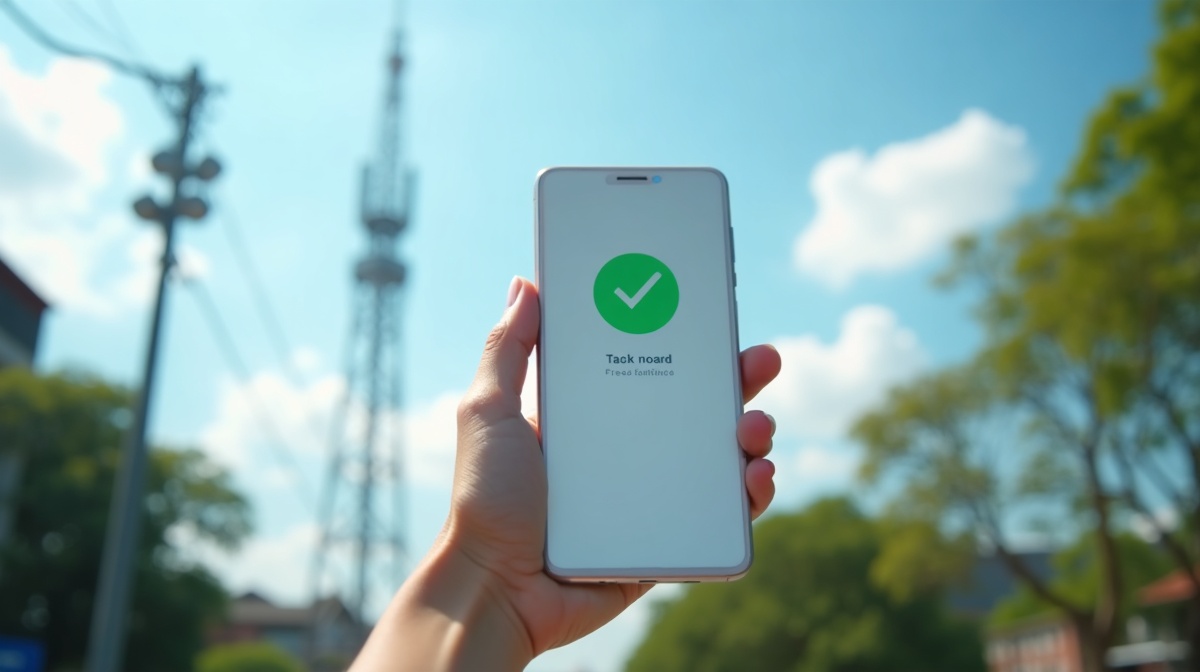
The Unetwork app performs five distinct types of telecom verification tasks. Each one tests a specific aspect of mobile network infrastructure. Every task completed generates verifiable proof on chain and earns UPs for the operator.
| Task | Type | What It Does | Requires SIM |
|---|---|---|---|
| Caller ID | Active | Verifies caller ID data transmits correctly across carriers | Yes |
| SMS | Active | Tests message delivery accuracy, timing, and content integrity | Yes |
| Scout | Active (walking) | Maps network coverage on foot with GPS and signal data | No |
| Runner | Active (driving) | Maps coverage at vehicle speeds, tests tower handoffs | No |
| Connection | Passive | Measures latency, speeds, and availability in background | No |
Caller ID Testing is one of the highest value tasks. Your phone receives test calls to verify that caller ID information transmits correctly across network boundaries. Telecoms need this because international call routing through multiple carriers can corrupt or strip caller ID data. Your phone acts as a real world endpoint, confirming whether the correct number appears on screen.
SMS Verification works the same way for text messages. The app sends or receives test SMS messages and reports delivery status, timing, and content accuracy. This helps telecoms identify routing issues, delivery delays, and spam filtering problems.
Scout tasks involve mapping network coverage while you walk. The app records signal strength, network type (3G, 4G, 5G), and GPS coordinates as you move through an area on foot. Think of Scout as the explorer. It discovers new coverage data in areas that have never been tested.
Runner tasks are the vehicular version of Scout. When you drive, your phone maps coverage along roads and highways at vehicle speeds. This captures different data because handoff behavior (switching between cell towers) changes at higher speeds. Think of Runner as the maintenance crew. It validates and re verifies routes that Scouts discovered.
Connection is the most passive task type. Your phone periodically measures its connection quality, latency, download and upload speeds, and network availability without you doing anything. This background telemetry builds a continuous picture of network performance at your location over time. Zero active involvement required.
How Do You Set Up a Unetwork License?
Setting up a Unetwork license takes about 10 minutes. You need a smartphone with a mobile data connection. That is it. No mining rigs, no servers, no special hardware.
- Download the Unetwork app from the Apple App Store or Google Play Store. Create an account with your email.
- Get a lease codefrom a node owner. Lease codes look like "UNL-XXXX-XXXX-XXXX". You can find available codes in our license directory, community groups, or directly from node owners.
- Enter the lease code in the app under the License section. The app binds the license to your device and shows your agreed split ratio.
- Grant permissions. The app needs location access (for Scout and Runner), phone access (for Caller ID testing), and SMS access (for SMS verification). Denying these reduces your earning potential.
- Start earning. Tasks are assigned automatically. You can monitor earnings, completed tasks, and uptime in the app dashboard.
The most common setup issue is permissions. If you deny location, phone, or SMS permissions, certain task types will not be available to your device. Grant all requested permissions for maximum earnings.
How Do Unetwork Operators Withdraw Their Earnings?
Unetwork operators withdraw UPs as cryptocurrency directly from the app. The minimum withdrawal is $5 in UPs. Each individual withdrawal is capped at $150. There is no limit on how frequently you can withdraw.

Supported withdrawal chains: Ethereum, Binance Smart Chain, Solana, XRP (Ripple), and Cardano. Once you withdraw UPs to your crypto wallet, converting to local currency depends on your country:
| Country | Method | Steps | Time |
|---|---|---|---|
| Philippines | GCash GCrypto | 4 steps | 5 to 15 min |
| India | CoinDCX | 4 steps | 5 to 30 min |
| Nigeria | Quidax / Busha | 5 steps | 1 to 4 hrs |
| Kenya | Binance P2P to M-Pesa | 4 steps | 5 to 10 min |
| Thailand | Bitkub | 4 steps | 1 to 24 hrs |
| Indonesia | Indodax | 4 steps | 15 to 60 min |
The withdrawal process is one of Unetwork's underrated strengths. Unlike many DePIN projects that lock earnings behind complex staking or vesting schedules, Unetwork lets operators access their earnings quickly and convert to spendable local currency through familiar platforms. Most Filipino operators go from UPs to pesos in their GCash wallet within 15 minutes.
Who Built Unetwork and Who Are the Partners?
Unetwork is built by Minutes Network, a company focused on decentralized telecom infrastructure. Minutes Network develops the core technology stack, manages the task distribution system, and maintains the blockchain layer that records proof of work and processes payments.
The most prominent partnership is with World Mobile, a blockchain based mobile network operator building connectivity infrastructure in underserved markets, starting with Africa. World Mobile uses Unetwork's edge verification data to validate its own network performance and coverage claims. This partnership gives Unetwork access to a growing network of cell sites and a built in demand for verification tasks.
Unetwork also operates within the Polkadot ecosystem, which provides blockchain infrastructure for cross chain interoperability. Additional partnerships and integrations are in development. As more telecom operators recognize the value of crowdsourced network verification, the demand for Unetwork's edge data is expected to grow.
Is Unetwork Worth Getting Into in 2026?
Whether Unetwork is worth your time depends on your situation and expectations.
For operators in developing markets (Philippines, India, Nigeria, Kenya), even modest earnings in USD translate to meaningful local income. Running a leased license costs almost nothing beyond the mobile data plan you already pay for. The barrier to entry as an operator is essentially zero.
For prospective node owners, the calculus is different. A Round 2 node costs $10,000 for 200 licenses. At current earning rates of roughly $48 per month, the breakeven timeline is long. The bet is that task volumes increase as more telecom partners join the network. That is a reasonable expectation. But it is not guaranteed.
What makes Unetwork stand out in the DePIN landscape is that the work is real. Your phone is not running meaningless hash calculations. It is performing tasks that telecom companies genuinely need and are willing to pay for. The UPs token is pegged 1:1 to USD, which removes the token price volatility that plagues most crypto projects. And withdrawals are straightforward with multiple supported chains.
The biggest risks are network growth pace, regulatory changes in crypto off ramping in certain countries, and the general uncertainty inherent in any early stage project. Start with a leased license to test the experience before committing to a node purchase.
Ready to Start Earning?
Browse available lease codes in our license directory. Copy a code, enter it in the Unetwork app, and start completing tasks today.
View License DirectoryFrequently Asked Questions
Is Unetwork the same as Unity Network?
Yes. Unetwork is the official rebranded name of Unity Network. All Unity Node licenses, operator licenses, and the Unity app now operate under the Unetwork brand. The technology, rewards system, and license structure remain exactly the same. The rebrand was done to create a distinct identity separate from Unity Technologies (the game engine company).
How much does a Unetwork license earn per month?
A single license earns approximately $0.80 to $1.20 per month in UPs. A full node of 200 licenses earns roughly $48 per month at 50% uptime. Operators in the Philippines and India tend to see the most consistent task flow.
What tasks does the Unetwork app perform?
Five types: Caller ID Testing, SMS Verification, Scout (mapping on foot), Runner (mapping while driving), and Connection (passive background measurement). Each completed task earns UPs.
Do I need special equipment to run Unetwork?
No. You need an Android or iOS smartphone with a mobile data connection. The app runs in the background and uses minimal battery and data. No mining rigs, servers, or special hardware required.
How do I withdraw Unetwork earnings?
Withdraw UPs as cryptocurrency from the app. Supported chains: Ethereum, Binance Smart Chain, Solana, XRP, and Cardano. Minimum $5, maximum $150 per withdrawal, no limit on frequency. Convert to local currency through regional exchanges like GCash (Philippines), CoinDCX (India), or Bitkub (Thailand).
Who built Unetwork?
Minutes Network, a company focused on decentralized telecom infrastructure. Unetwork partners with World Mobile and operates within the Polkadot blockchain ecosystem.